Game Night Isn't Going Anywhere: How American Magic Stores Are Reinventing the Local Scene

Photo: Betty Longbottom , CC BY-SA 2.0, via Wikimedia Commons
Every few months, someone writes the local game store's obituary. The argument is always tidy: Arena is free and available at two in the morning, singles ship overnight, and every Discord server you're in can fire a draft on an hour's notice. Why would anyone drive twenty-five minutes to a strip mall?
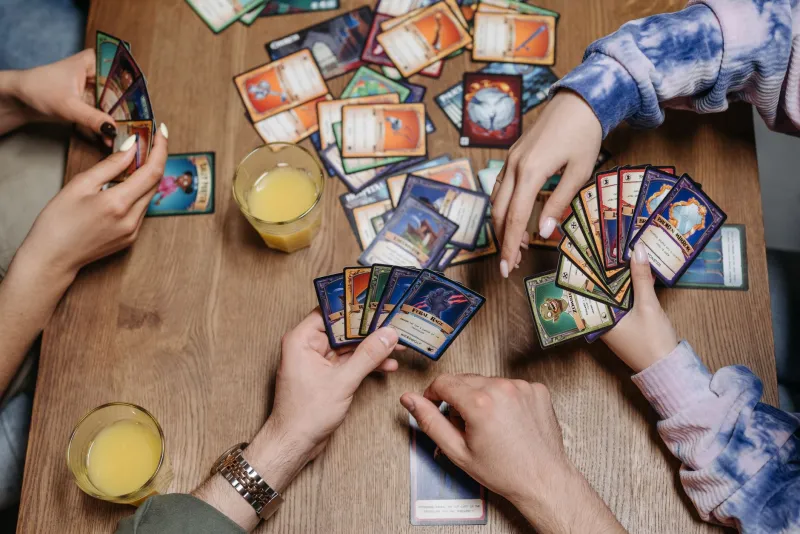
And then you walk into that strip mall on a Tuesday and there are eight people in folding chairs, one kid learning to shuffle a Commander deck, and a store owner who knows all of their names.
The store didn't die. It changed what it's selling. In 2026, a local game store isn't really selling access to cards anymore — you can get cards anywhere. It's selling a scheduled place to be, with people who expect you to show up.
Commander Night Is the New Friday Night Magic
For a long time, Friday Night Magic was the anchor of the paper calendar. In a lot of US markets, that anchor has loosened. Standard attendance has thinned in plenty of stores, and the slot has quietly been filled by Commander.
It's not hard to see why. Commander is forgiving in a way that constructed formats aren't. You can show up with a precon, play three games, lose two of them, and still have a great night. Nobody's tournament life is on the line. There's no round clock and nobody's hovering with a slip.
Stores that have figured this out tend to structure it the same way: a fixed weekly slot, a light entry fee, and a small, predictable reward. Five dollars with a pack per player works. Free entry with the gentle expectation that you buy something from the case works too. The exact model matters less than the consistency.
The Casual Tournament Learned to Relax
There's a difference between a casual event and an unstructured one, and the stores that thrive tend to understand it. Casual doesn't mean no format, no start time, and no idea who's playing whom. It means low stakes, clear rules, and a structure that doesn't punish you for showing up with a deck you like.
The formats doing the work right now are the modest ones. Cheap sealed. Draft with a pack-per-win and no cut to top eight. Two-headed Giant nights. A monthly pauper or budget-constructed event where the whole point is that nobody had to spend $300 to be there.
Notice that all of these have a defined entry cost and a defined ending. Players who don't want to commit a whole evening will commit two hours. The store that respects the clock gets those players back.
Scheduling Is the Product Now
The most underrated skill in running a game store has nothing to do with card knowledge. It's the calendar.
What kills a game night isn't competition from Arena. It's uncertainty. If players don't know whether a pod will fire, they stay home, and then it doesn't fire, and then everyone learns to stay home. The fix is boring and it works: pick a night, post about it every single week, and show up even when the turnout is thin. Four players is still a Commander pod and it's still a night that happened.
Consistency beats variety. A predictable Thursday outperforms a rotating calendar of events that each sound cooler on paper than the last one. Stores with a busy schedule often have a simpler one than you'd think — one anchor night, one weekend event, and a standing open-play slot for people who just want to shuffle.
The Player Who Becomes the Organizer
A lot of the best Magic happening right now is player-led. Cube nights where a regular brings the cube and the store provides the tables. Draft leagues run by a judge who wants somewhere to run them. A Discord server started by three regulars that now coordinates carpools across a metro area.
Stores that allow this tend to do better than stores that treat the calendar as sacred property. The owner can't personally invent every event. But the owner can hand a regular a key to the back room, post the event, and let it grow. The store gets traffic, the organizer gets a scene, and the players get something to do on a Wednesday.
If you're the person who's always the one saying “we should really do a draft league,” this is your sign to actually ask the owner. The worst answer is no.
What Keeps the Lights On
Here's the part that isn't fun to write: a store hosting thirty players a night that sells two sodas is not a sustainable business. Free play has real value, and it's also not free — the chairs, the tables, the heat, the person behind the counter.
So buy something. Buy your sleeves there even if they're a dollar more. Preorder the new set through the store instead of the internet. Grab a snack. Tell the owner what you actually want them to stock, because they can't guess and they're usually guessing anyway. And when something's wrong — a bad actor in the pod, a pricing problem, a scheduling conflict — say it directly to the person who can fix it instead of only in a group chat.
Show Up, Pay In, Speak Up
The local game store survives on a depressingly simple formula: people show up on a regular schedule, spend a little money, and treat each other well enough that everyone wants to come back.
That's not nostalgia talking. It's the actual mechanism, and it's the same one it's always been. The formats change — Commander night instead of Standard FNM, draft leagues instead of grinders, cube on Wednesdays — but the thing being sold has never really been the cards.
So find your store's schedule this week. Put it on your phone like it's a real appointment. Bring a spare deck for the person who shows up alone. That's the whole trick, and it's been the whole trick the entire time.